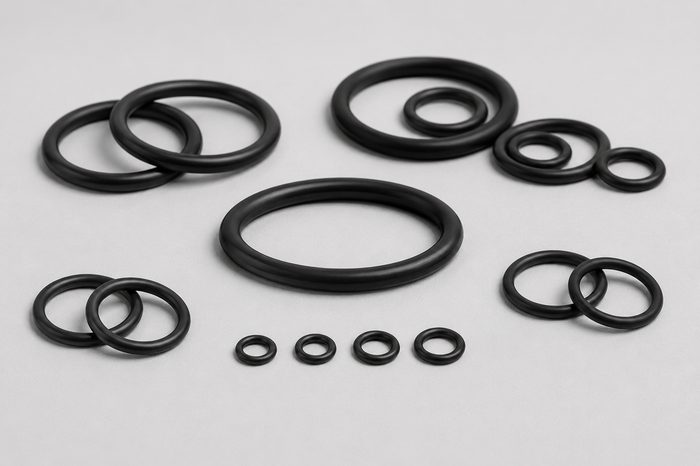
Ethylene Propylene Diene Monomer (EPDM) resists water, steam, glycols, and outdoor weathering/ozone exceptionally well, making it the standard compound for potable water, steam and FMCG/CIP washdown applications. EPDM must never be specified where mineral oil or petroleum-based fluid contact is possible.
| Temperature range | -40°C to +150°C |
|---|---|
| Hardness range | 40–90 Shore A |
| Relative cost | $$ |
| Resists | Water, steam, glycol-based brake fluid, ozone, UV, alkalis |
| Avoid with | Mineral oils, fuels, most hydrocarbon-based lubricants |
| Standards | AS568 / ISO 3601 / BS 4518 |
EPDM isn't a single formulation — the grade below matters as much as the base compound once your application gets specific.
Cured without sulfur, avoiding the plasticizer migration and taste/odor issues sulfur-cured EPDM can cause in potable water and steam systems — FITCO's default for water treatment and food/beverage contact.
A lower-cost cure system suitable for general outdoor, weatherproofing and non-potable water applications where the potential for slight taste/odor transfer isn't a concern.
A compound variant tuned for repeated high-temperature steam cycling — autoclaves, steam valves and sterilization equipment — beyond what standard-grade EPDM is rated for.
Not sure which sub-grade fits your application? Send us your fluid, temperature and pressure and our engineers will confirm — send an enquiry →
Physical property data — hardness, tensile strength, elongation, compression set and temperature resistance — tested to ASTM/ISO standards for each hardness grade FITCO stocks.
Full physical property data sheet — hardness, tensile strength, elongation at break, compression set and temperature resistance.
Download Datasheet →General-purpose seal for mineral oils, fuels and hydraulic fluids.
-20°C to +200°CHigh-temperature, chemical-resistant sealing for oil & gas and process industries.
-15°C to +327°CNear-universal chemical resistance for the most demanding process seals.
Compare EPDM O-Rings against alternative compounds to confirm you have the right elastomer for your application.
EPDM vs NBR Comparison →Select standard, cross-section and ID — get instant OD and material readout for EPDM O-Rings.
Open Size Chart →Download the physical property datasheet for this compound — hardness, tensile strength, compression set and temperature resistance.
Download PDFs →Send us your fluid, temperature and pressure — our engineers will confirm the compound.